When I ask firm leaders this question, the most common answer is price.
Someone came in lower. The client chose the cheaper option. There was nothing more we could do.
Sometimes that’s true. But I think it’s often an incomplete answer, and it can stop a firm from looking at the part it actually controls.
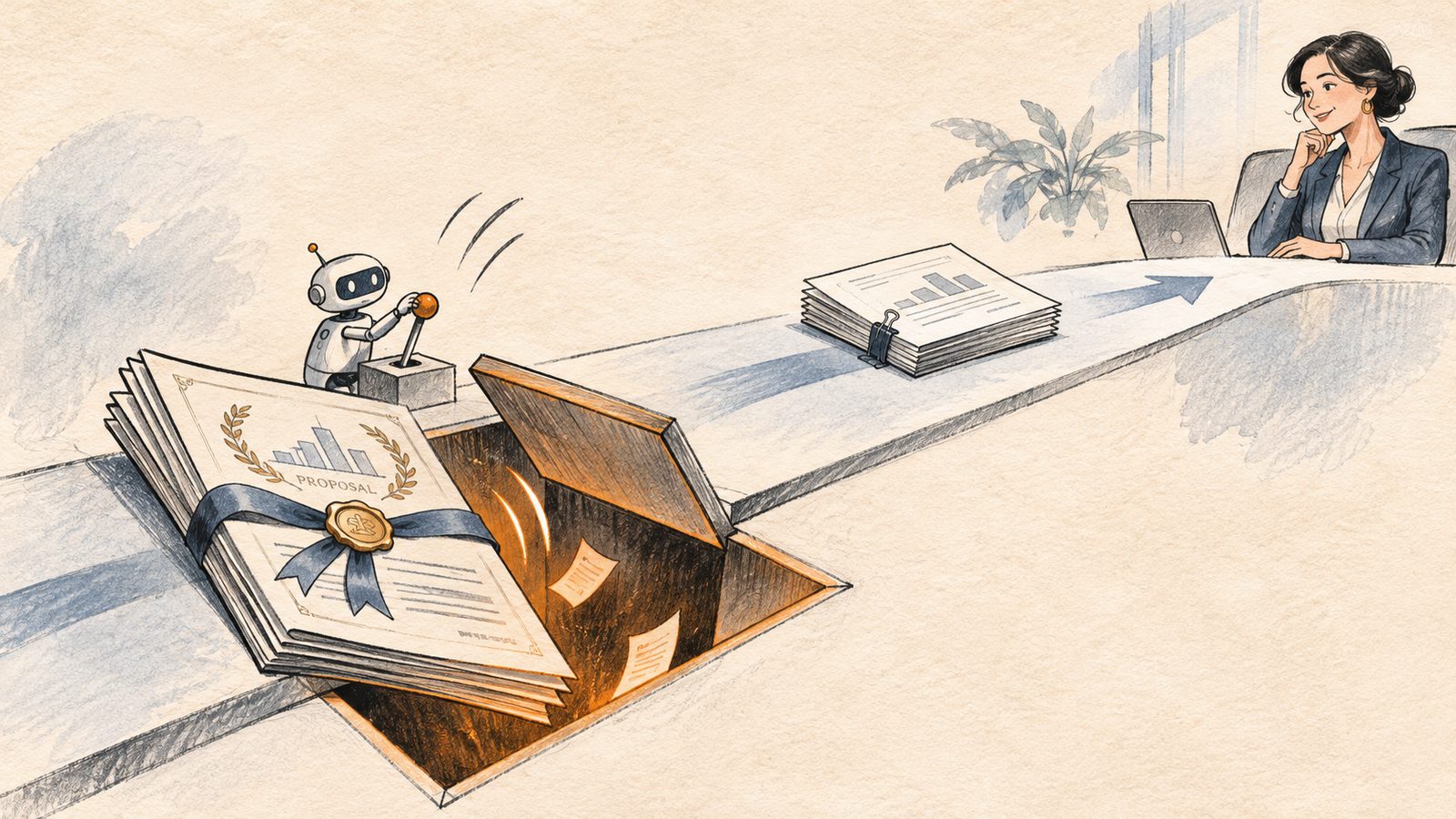
What if we’re losing proposals before anyone even looks at the price?
For years, we’ve written proposals with one assumption: that someone on the client’s side will sit down, read our submission, evaluate our qualifications, and compare us with the competition.
But that assumption is getting weaker.
Reviewers are often working through dozens, sometimes hundreds, of submissions with limited time. And AI is creating new ways for organizations to review, evaluate, and shortlist proposals.
Not every client has formally adopted AI screening. But think about what we’ve seen inside our own firms. Employees are using AI to help with their work, sometimes without their organizations even knowing about it.
Why wouldn’t the same thing be happening on the client side?
Whether it’s part of an official evaluation process or an employee using AI to make sense of a stack of submissions, there’s a new gatekeeper firms need to start paying attention to.
The AI screener.
And here’s why that matters.
You might have the right experience, the strongest team, and a great approach. But if an AI system can’t recognize those strengths or match them to the client’s evaluation criteria, you may never make it to the shortlist.
The decision-maker might never get the chance to see what makes your firm different.
We’ve seen something similar happen in hiring.
Years ago, resumes started passing through applicant tracking systems before recruiters reviewed them. Job seekers had to rethink how they presented their qualifications because having the right experience wasn’t necessarily enough if the software couldn’t identify it.
Now, a similar shift may be emerging in how firms compete for projects.
Your proposal may have two very different readers. And you need to win over both.
The AI screener looks for evidence.
Its job may be to analyze your submission, identify relevant qualifications, compare your responses against evaluation criteria, and help determine which firms deserve a closer look.
It doesn’t know your firm’s reputation unless that information is available to it. It can’t give you credit for experience it fails to identify. And it may not interpret your carefully crafted proposal the way you intended.
This creates a new challenge for firms that have spent years perfecting proposals for human readers.
The human decision-maker looks for confidence.
Once you make the shortlist, people still need to decide who they want to work with.
And people don’t choose firms on compliance alone.
They look for someone who understands their specific problem, has a thoughtful approach, and can be trusted to deliver over the life of the project.
Two firms can be equally qualified. But the one that makes the client feel understood and confident has an advantage.
AI may help you get shortlisted. But people still need a reason to choose you.
What I find interesting is that this isn’t just about using AI to write better proposals.
It’s about recognizing that AI is beginning to change how our clients evaluate proposals in the first place.
And that changes how we need to think about competing for work.
For leaders, this raises a question worth asking your team:
If an AI system were the first to evaluate our proposals, would it recognize what makes us the right firm for the project?
Maybe price is the reason we lose less often than we think.
Sometimes, we might be losing before the decision-maker even gets to the price.
In my latest video, I walk through five practical steps for writing proposals that can make it through AI screening and still win over the human decision-maker.